 geo.be Metadata Catalog
2026
Type of resources
Available actions
Topics
INSPIRE themes
federalThemes
Keywords
Contact for the resource
Provided by
Years
Formats
Representation types
Update frequencies
status
Service types
Scale
Resolution
-
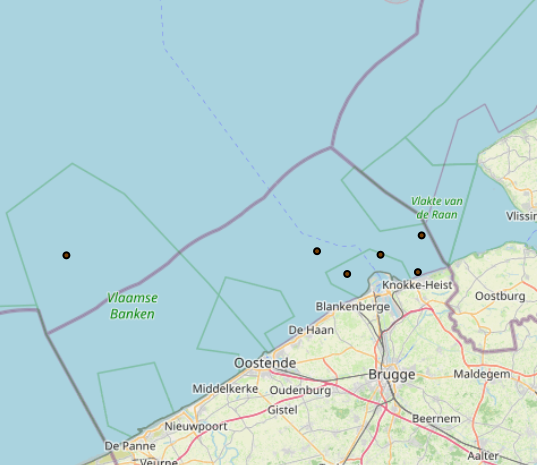
The Royal Decree of 20 March 2026 establishing the marine spatial plan for the period 2026 to 2034 in the Belgian marine areas defines 1 measuring pole: Measurement poles (Art. 25§2). It replaces the 2020 Marine Spatial Plan. Please refer to the Belgian official gazette ("Moniteur belgeBelgisch Staatsblad") for official reference information.
-
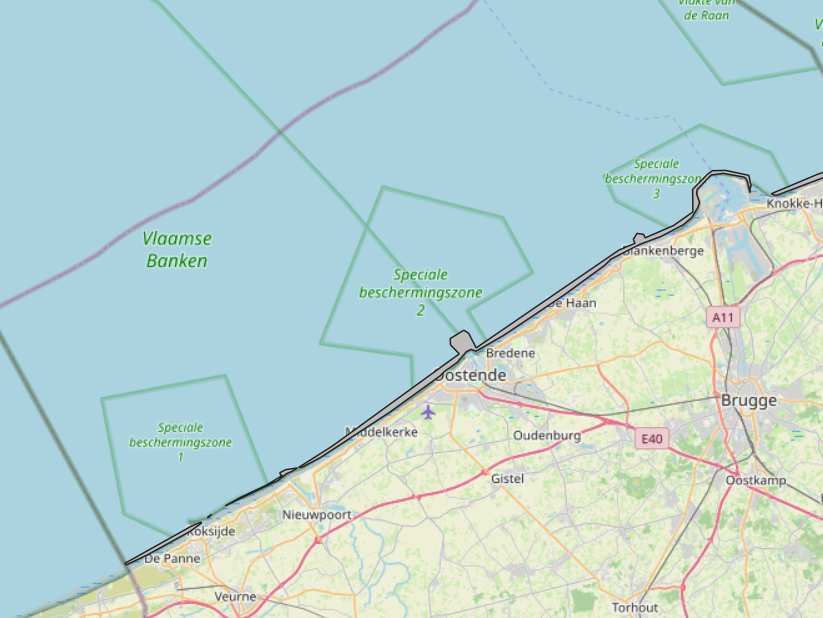
The Royal Decree of 20 March 2026 establishing the marine spatial plan for the period 2026 to 2034 in the Belgian marine areas defines 1 coastal protection experiments zone: Coastal protection belt (Art. 20§2). It replaces the 2020 Marine Spatial Plan. Please refer to the Belgian official gazette ("Moniteur belgeBelgisch Staatsblad") for official reference information.
-
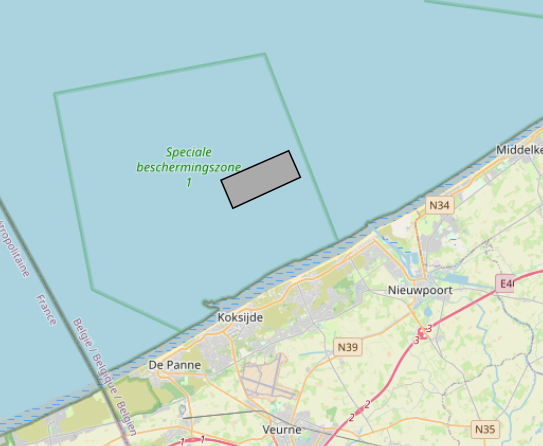
The Royal Decree of 20 March 2026 establishing the marine spatial plan for the period 2026 to 2034 in the Belgian marine areas defines 1 commercial and industrial zones: Zone C for commercial and industrial activities (Art. 27§1). It replaces the 2020 Marine Spatial Plan. Please refer to the Belgian official gazette ("Moniteur belgeBelgisch Staatsblad") for official reference information.
-
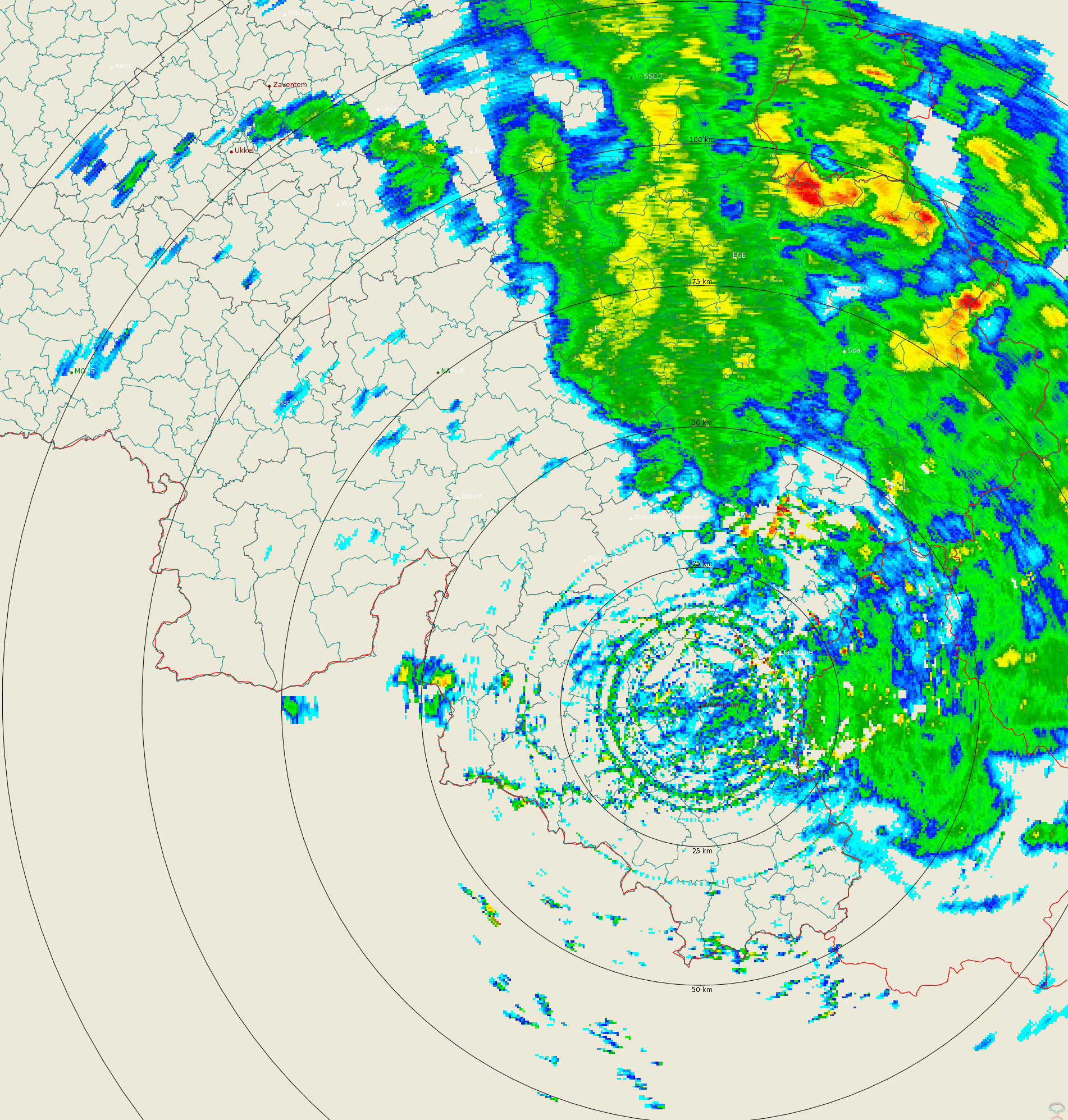
Polar volume reflectivity data from the Wideumont weather radar. Volume data files are produced every 5 minutes from a multiple elevation scan.
-
UNDER EMBARGO - This dataset originates from the BE/2023 sampling campaign conducted in southwest Greenland fjords (Igaliku and Tunulliarfik) and quantifies grazing impacts by micro- and mesozooplankton on phytoplankton and heterotrophic microbial communities (including bacteria) in two fjord systems characterized by contrasting glacial regimes. Grazing and microbial growth rates were estimated using two-point dilution experiments (two-point dilution experiments), alongside experiments assessing mesozooplankton and copepod grazing on both phytoplankton and microzooplankton. Community responses were resolved using imaging flow cytometry, enabling the identification of plankton functional groups (autotrophic, mixotrophic, and heterotrophic) and size classes. The dataset also includes measurements of chlorophyll a variability determined by high-performance liquid chromatography. Overall, the dataset supports analyses of trophic interactions and grazing dynamics across the microbial food web under differing glacier-influenced environmental conditions.
-
UNDER EMBARGO - This dataset is part of BE/2023 sampling campagn in SW Greenland fjords (Igaliku and Tunulliarfik). Pelagic community was analysed using Imaging Flow Cytometry (iFCM) with an ImageStream®X Mk II. Cells were grouped into functional size classes—pico-, nano- and microplankton—according to measured cell length. Cells lacking chlorophyll autofluorescence were classified as heterotrophic or chemotrophic organisms, including heterotrophic picoplankton/bacteria (HP; ≤2 µm) and heterotrophic nanoplankton (HN; 2–20 µm). No larger heterotrophs (>20 µm) were visually detected. Autofluorescent cells were considered phototrophic, although this fraction may also include mixotrophic taxa, and comprised picophytoplankton (AP; ≤2 µm), nanophytoplankton (AN; 2–20 µm), and microphytoplankton (AMicro; 20–100 µm). To estimate the biovolume of each plankton class, the two-dimensional cell surface area measured by the IDEAS® imaging software was multiplied by the mean cell width, assuming that cell width approximates the third spatial dimension. Carbon biomass was subsequently derived from biovolume using established carbon–volume relationships. For the HP fraction, carbon content was estimated using the bacterial conversion proposed by Romanova and Sazhin (2010), where volume is expressed in µm³. Although the HP fraction may also include heterotrophic picoeukaryotes, and its biomass may therefore be partly underestimated, this conversion was applied because the fraction was assumed to be numerically dominated by bacteria. For the other protist groups, carbon biomass was derived following Menden-Deuer and Lessard (2000). Carbon values were converted from pg C cell⁻¹ to carbon biomass (µg C L⁻¹) based on cell abundance.
-
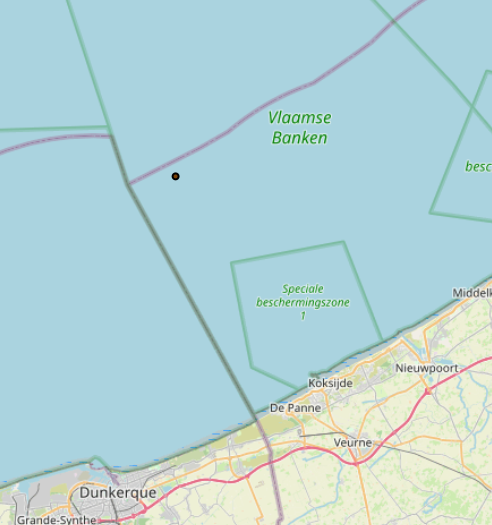
The Royal Decree of 20 March 2026 establishing the marine spatial plan for the period 2026 to 2034 in the Belgian marine areas defines 1 radar tower: Oostdyck radar tower (Art. 25§3). It replaces the 2020 Marine Spatial Plan. Please refer to the Belgian official gazette ("Moniteur belgeBelgisch Staatsblad") for official reference information.
-
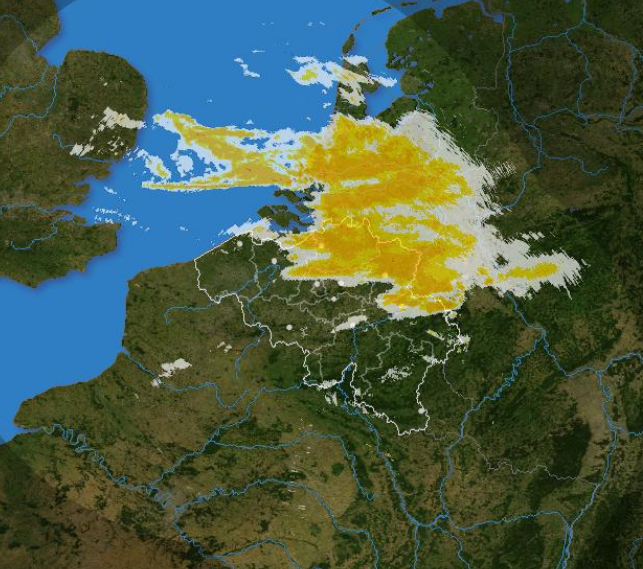
The composite is produced every 5 minutes using the reflectivity data from the Wideumont and Jabbeke weather radars.
-
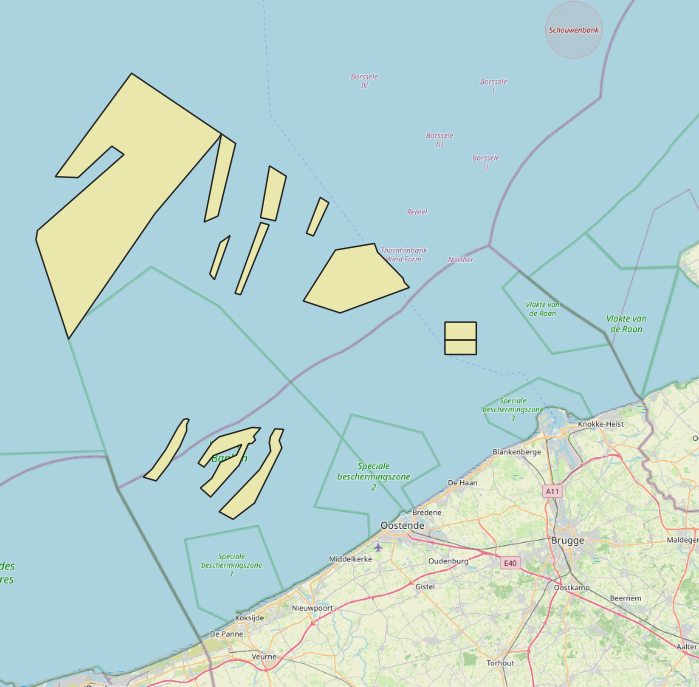
The Royal Decree of 20 March 2026 establishing the marine spatial plan for the period 2026 to 2034 in the Belgian marine areas defines 12 sand and gravel extraction zones: Sand and gravel extraction sector 1a (Thorntonbank) (Art. 19§1.1°), Sand and gravel extraction sector 4d (Art. 19§1.10°), Sand and gravel extraction sector 5 (Blighbank) (Art. 19§1.11°), Sand extraction sector 2kb (Kwintebank) (Art. 19§1.2°), Sand extraction sector 2br (Buiten Ratel) (Art. 19§1.3°), Sand extraction sector 2od (Oostdyck) (Art. 19§1.4°), Sand and gravel extraction sector 3a (Sierra Ventana) (Art. 19§1.5°), Sand and gravel extraction sector 3b (Sierra Ventana) (Art. 19§1.6°), Sand and gravel extraction sector 4a (Noordhinder) (Art. 19§1.7°), Sand and gravel extraction sector 4b (Oosthinder North) (Art. 19§1.8°), Sand and gravel extraction sector 4c (Oosthinder South) (Art. 19§1.9°), Extraction search zone (Art. 19§4). It replaces the 2020 Marine Spatial Plan. Please refer to the Belgian official gazette ("Moniteur belgeBelgisch Staatsblad") for official reference information.
-
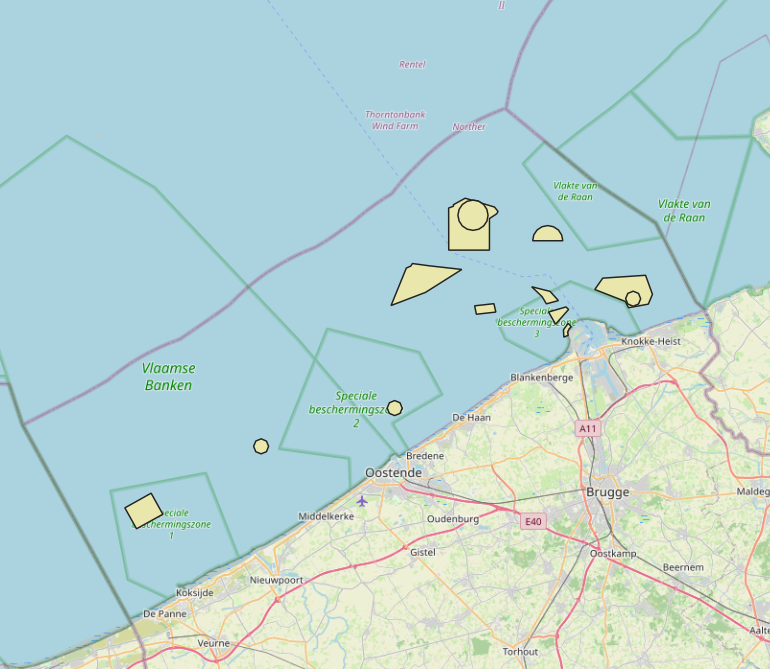
The Royal Decree of 20 March 2026 establishing the marine spatial plan for the period 2026 to 2034 in the Belgian marine areas defines 13 dredging zones: Dredge spoil disposal zone S1 (Art. 15§1.1°), Dredge spoil disposal zone S2 (Art. 15§1.2°), Dredge spoil disposal zone "Public Works Ostend" (Art. 15§1.3°), Dredge spoil disposal zone "Public Works Zeebrugge East" (Art. 15§1.4°), Dredge spoil disposal zone "Public Works Zeebrugge West" (Art. 15§1.5°), Dredge spoil disposal site "Public Works Nieuwpoort" (Art. 15§1.6°), Dredge spoil disposal zone "Zeebrugge Erosion Pit" (Art. 15§1.7°), Zone 1 for future replacement of dredge spoil zone S1 (Art. 15§4.1°), Zone 2 for future replacement of dredge spoil zone S1 (Art. 15§4.2°), Search zone 1 for future replacement of Zeebrugge East and West (Art. 15§6), Search zone 2 for future replacement of Zeebrugge East and West (Art. 15§6), Search zone 3 for future replacement of Zeebrugge East and West (Art. 15§6), Dredge spoil disposal zone for future replacement "Public Works Nieuwpoort" (Art. 15§8). It replaces the 2020 Marine Spatial Plan. Please refer to the Belgian official gazette ("Moniteur belgeBelgisch Staatsblad") for official reference information.